
1 high school
Ok, so there’s a lot to distract the world from reading novels. Or even wondering why you would, when you could read a summary, or a nonfiction book on whatever the subject is. Why novels?
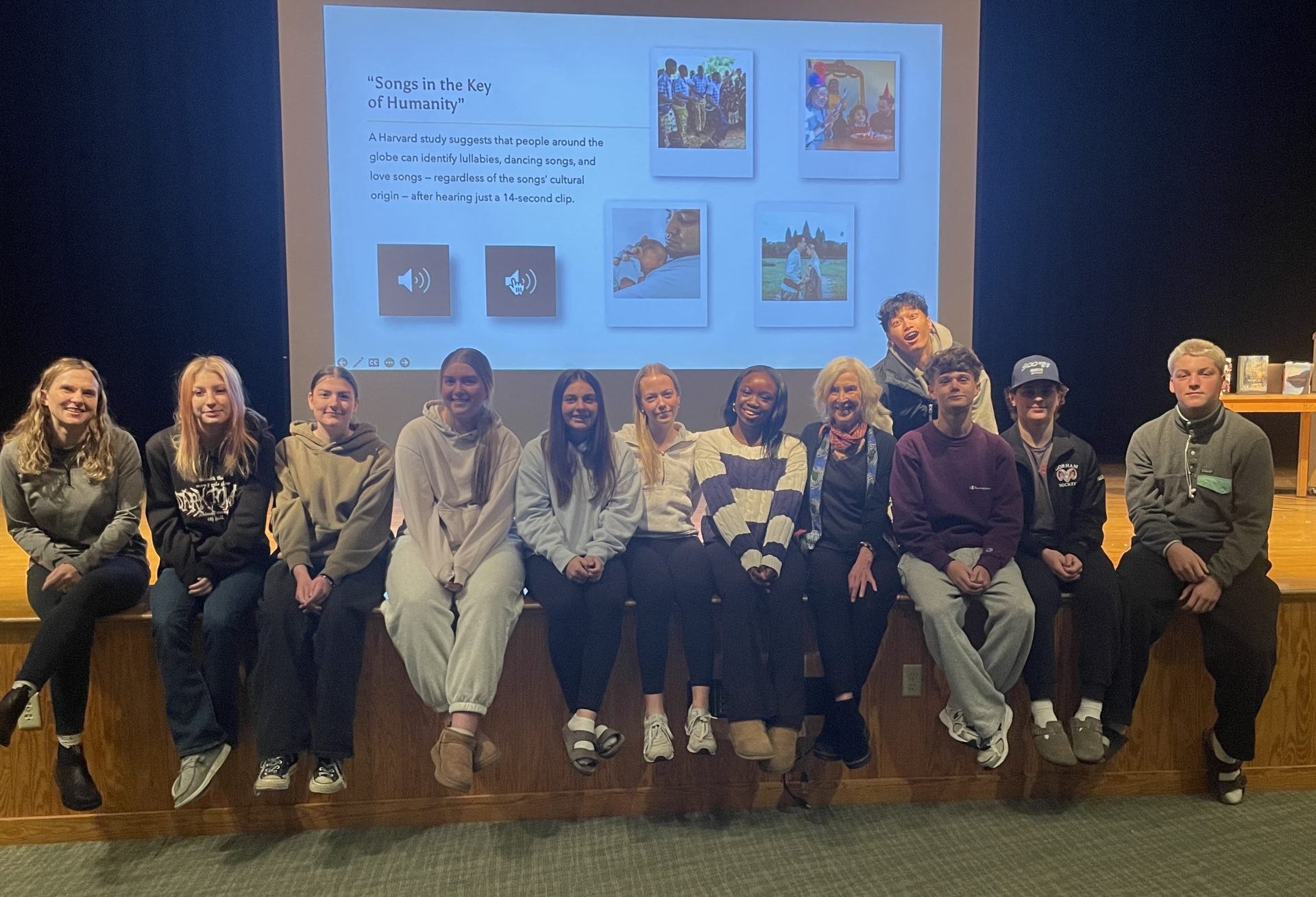
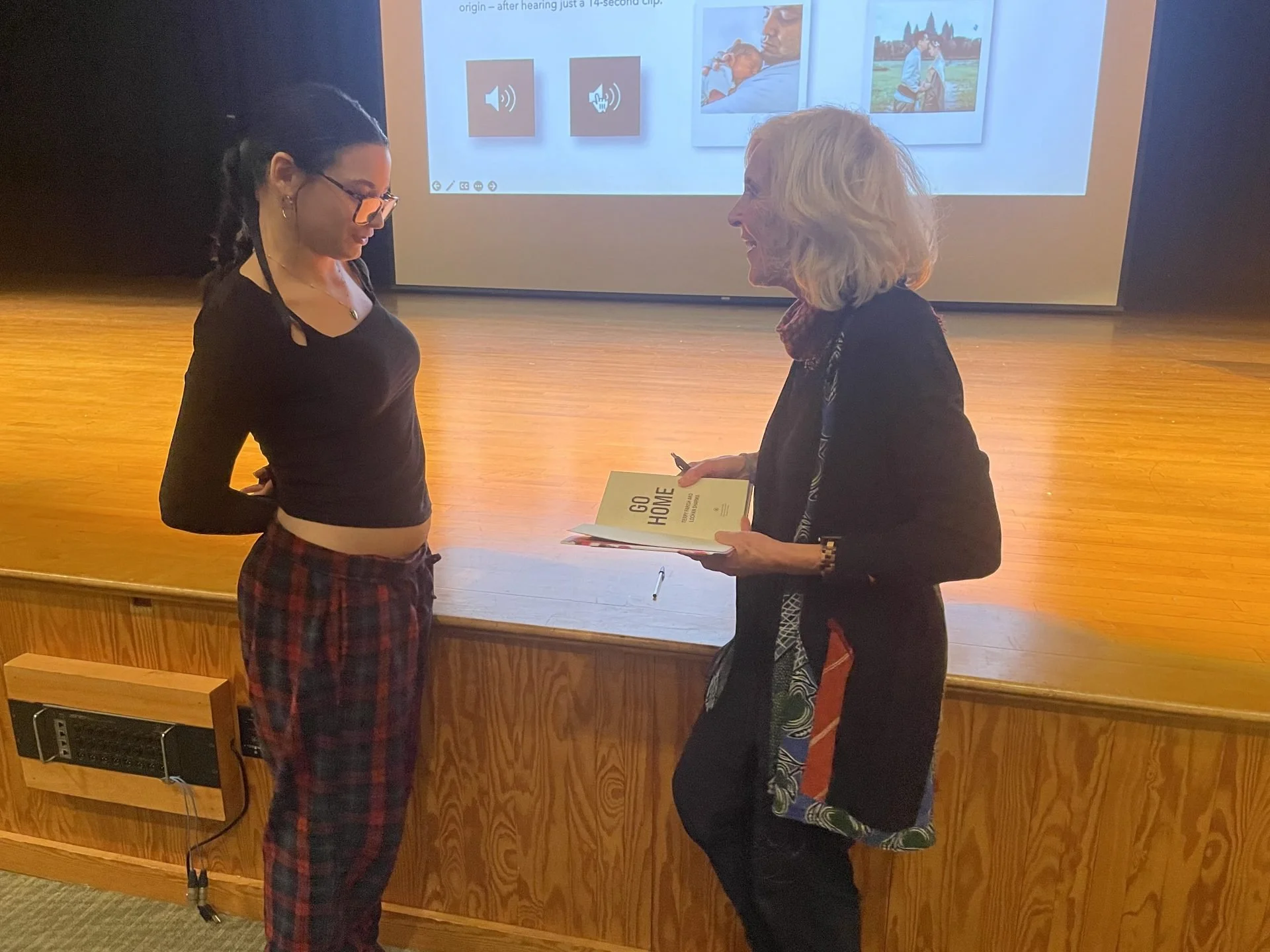
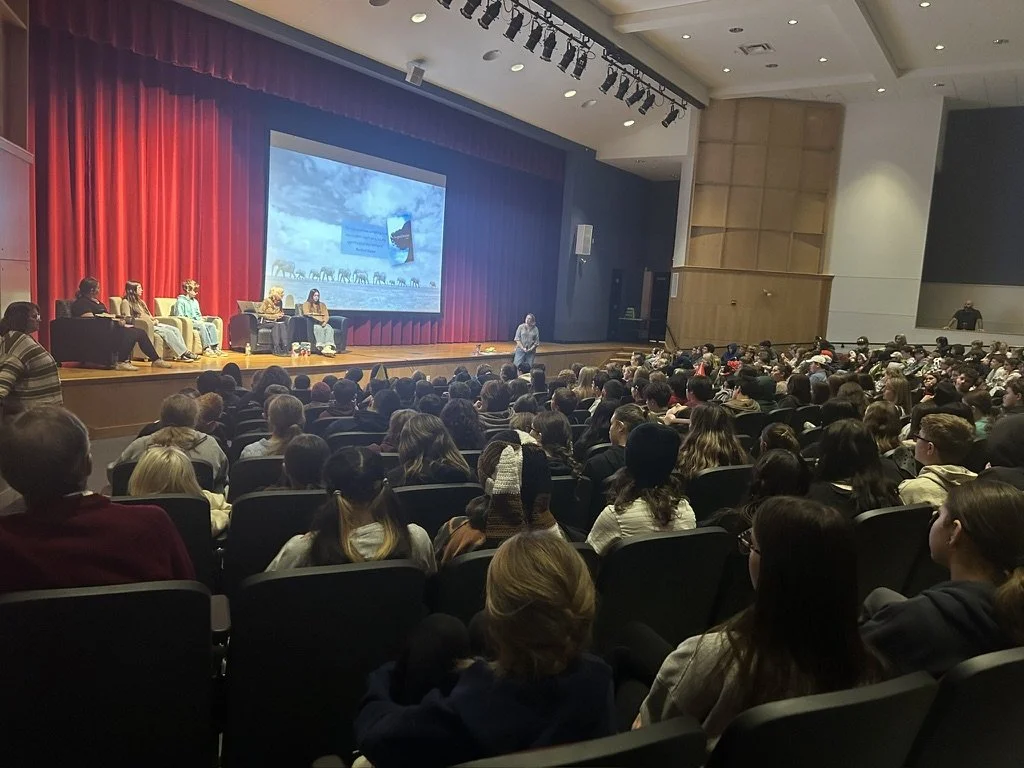
In my role as a novelist, I recently presented an assembly program to students at Gorham High School in Maine. Many had not read my novels, but they came to hear a writer who often writes as a witness to the world and its people. The title of my talk was “Writing as a Witness,” and I wanted to bring them the world.
I’m influenced by and in love with the vision of I’m Your Neighbor Books, the Portland-based nonprofit that puts its trust in children’s books and novels to help readers meet newcomers in their communities. The IYNB vision is that we can meet people through story, which is what I hope my books help to do. How are we different, or how are we the same? IYNB features a collection of novels titled “Read to Belong, Read to Welcome.” In Gorham, I wanted to bring some of these stories along with my own and hear about books the students are reading.
In the assembly, I showed lots of pictures and read scenes set in Vietnam, South Sudan, Nepal, places I’ve been, or just on the border, and I’ve written about. We listened to clips of music that students could identify as a love song or a lullaby, even if they didn’t know the language, because the characteristics of melodies are similar across cultures. I read from “The Good Braider” since that was a book students had read in multilingual learner classes and American studies.
A girl in the second assembly, 11th and 12th graders, asked if there was something I learned from being in other countries, something I brought back home with me. I loved the question, and I was excited that a YA novel could take her down that road, and I imagined her on her own hero’s journey, like she was going to discover something. She was exploring and imagining being in the world. I told her that in Kenya, I never saw anyone throw anything away. Everything is used over and over. I brought that home.
The librarian, master collaborator
The organizer of my week in Gorham was the high school librarian, Kelly Tibbetts. From her, I discovered there were other organizations she worked with to bring a focus to immigrant lit and welcoming newcomers. She met with a team of librarians from all the schools. The high school Civil Rights team was honoring the statewide “Day of Welcome” project. Kelly said, “We piggybacked on the Civil Rights team project.” The day is for welcoming immigrants and refugees, as well as people with disabilities, and Native Americans, the area’s First People. I was amazed at so many groups working together to welcome. I’ll mention these to you as possible partners in your schools as you seek to support students’ understanding of the small, extraordinary world they’re growing up in, and will work in. There’s the ILC, the Instructional Leadership Corps, a staff committee with a goal “to ensure that all students’ holidays are represented and that staff have the knowledge to support students who may be observing different religious practices.” Also, the faculty of the 10th-grade English course, American Studies. They read literature about indigenous people, enslaved people, and immigrants, including many recent newcomers from Asia and Africa. Lori Littlefield, the Narragansett School librarian, whose students I also visited, as well as all the Gorham Schools, told me about a major collaborating partner, Aspire Gorham. It’s a “community-wide initiative of businesses and community organizations to connect students to professionals for career exposure.” The community of educators understands the novel is like alchemy. Novels play to our imaginations so that we can step into the experiences of others, and that students’ own reading opens the way to the power of writing.
I asked Kelly to recommend some books she and her students loved and learned from about cultures new to them. Kelly’s students follow a lot of BookTok creators, so that’s part of discoverability. The following are selected books on Kelly’s list and the I’m Your Neighbor Books collection. Follow the links for information and resources about the books on the IYNB site.
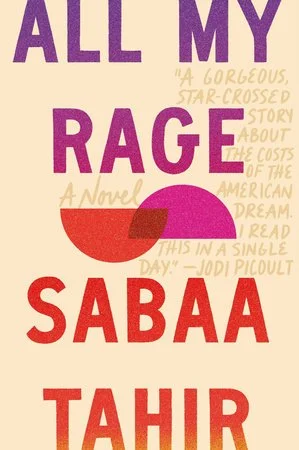
“All My Rage” by Sabaa Tahir
This is a ferocious story about love and the impact of a family’s tragedy in Pakistan that brings a young boy, Salahuydin, to live in California’s Mojave Desert. “All My Rage” asks a lot of readers, and yet Kelly’s students pass it around among themselves. Kelly describes it as a book about mental health, something students talk and read about. Tahir portrays a tender bond between Salahydin and Noon, the girl he grew up with. The student readers are totally engaged in the lives of the teens in high school in the novel and in how they negotiate contemporary America’s prejudices and troubles with addiction in their town. Tahir is writing across humanity. When Noon and Salahudin first meet as children, Tahir writes, “they spoke a language of pain and memory.” Maybe that’s the human language readers respond to. They find themselves.
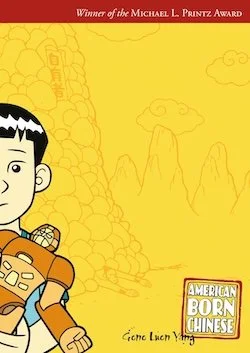
“American Born Chinese” by Gene Luen Yang
“Students constantly check this out,” Kelly says. “American Born Chinese” is the now-classic 2007 graphic novel. Yang captures what I hear from many nonwhite minority students about how they want not to be the other, not be the outsider. Gene Yang’s characters make it feel like a badge.
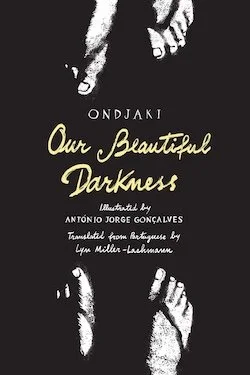
“Our Beautiful Darkness” by Ondjaki
Ondjaki is an Angolan writer, and the story is illustrated by the graphic novelist António Jorge Gonçalves. The book is an illustrated dialogue between two teens, set in the night in a blackout toward the end of the Angolan civil war. The pages are mostly black with streaks of the characters’ faces, eyes, and feet lit by headlights and starlight.
“Can star-wishes be said out loud?” the boy narrator asks.
“Sure. Do you have one in mind?”
“It’s a tricky one. I’d wish for a rainbow, even now.”
“No one can draw a rainbow in a dark sky,” she said.
“I think the angels that steal voices can…I want a rainbow dotted with lights, like a bridge at night.”
“A bridge?”
“To the other world. And back again. To call back those who left when it was still their time to be here.”
The translator of the original Portuguese into English, Lyn Miller-Lachmann, writes a historical note to tell readers about the long war in Angola following the country’s war for independence from Portugal. The book is like a prayer to youth and youth’s hope.
“Out of Nowhere” by Maria Padian
This story is set in a nearby fictional Lewiston, Maine, next door to Gorham. Students like seeing their part of Maine in a major novel.
“A Very Large Expanse of Sea” by Tahereh Mafi
Shirin, the main character, brings us into her life as a Muslim-American in the United States one year after 9/11. She has always worn a hijab and does not want to change that tradition. Pair her story as one more account with others of the impact on Americans of the 9/11 attacks. The author is Iranian-American. She shows us an angry 16-year-old Shirin, hardened by prejudice against her, who undergoes a fascinating unraveling of her steely indifference when she falls in love and faces a new kind of vulnerability and moral responsibility to another. It’s also about having breakdancing to live for.
“When a Brown Girl Flees” by Aamna Qureshi
Kelly hopes to get her hands on this one since it’s popular and is always checked out. Qureshi’s main character, 18-year-old Zahra, runs away from her devout Muslim home in California, where one of the few choices allowed by her traditional family when she graduates is to accept an arranged marriage. Students want to talk about how a person tries on different identities to be able to figure out their own and want to read novels with characters doing that, as Zahra does.
“Efrén Divided” by Ernesto Cisneros
Efrén is younger than the 16- to 18-year-olds in the previous books here. He’s 12. He lives in the America of ICE checkpoints, ICE helicopters, and ICE raids at workplaces. To me, it felt like young Efrén was in James Baldwin’s living room in his 1950s short story “Sonny’s Blues,” in which the adults speak in hushed voices about tragic injustices to Black relatives and old friends. Efrén is confused (“My mother has never done anything wrong”), but he feels the fear that surrounds his family, a tension that multilingual-learner teachers in Gorham told me their students express. When Efrén’s mother is arrested by ICE, it is he and his father who exchange fearful looks as they try not to frighten the younger ones. In a quick call, Efrén’s mom tells him, “I’m going to need you to take care of your brother and sister.” “Efrén Divided,” told carefully, is a story to help young readers understand the experiences of their classmates who’ve been separated by the U.S. government from their parents. “Efrén Divided” is a Pura Belpré Award winner; the author is a middle school teacher in Santa Ana, California, and he has a new book, “Queso, Just in Time.” You’ll find many teaching-support materials on his site.
Lasting impression
The last thing the Gorham high school librarian tells me is, “We’ve created a space here where students are comfortable asking questions of newcomers. Students are comfortable meeting people from away.” Kelly wants to build up the library’s collection of novels in the languages the new students speak, including Portuguese, Arabic, Farsi, and Spanish. They showed me how novels, with their deeply revealed characters as only novels can offer, their insistent voices, and their ways of seeing, have become key to a school community’s sense of belonging and welcoming.