
Seeing Haiti through a young girl’s eyes
With books provided by I’m Your Neighbor Books in English and Kreyòl (Haitian Creole), students from the Amiko Youth Program in Manchester, New Hampshire, read “Auntie Luce’s Talking Paintings” by Francie Latour. These Haitian-American sisters are drawing portraits, as Auntie Luce does in the story.
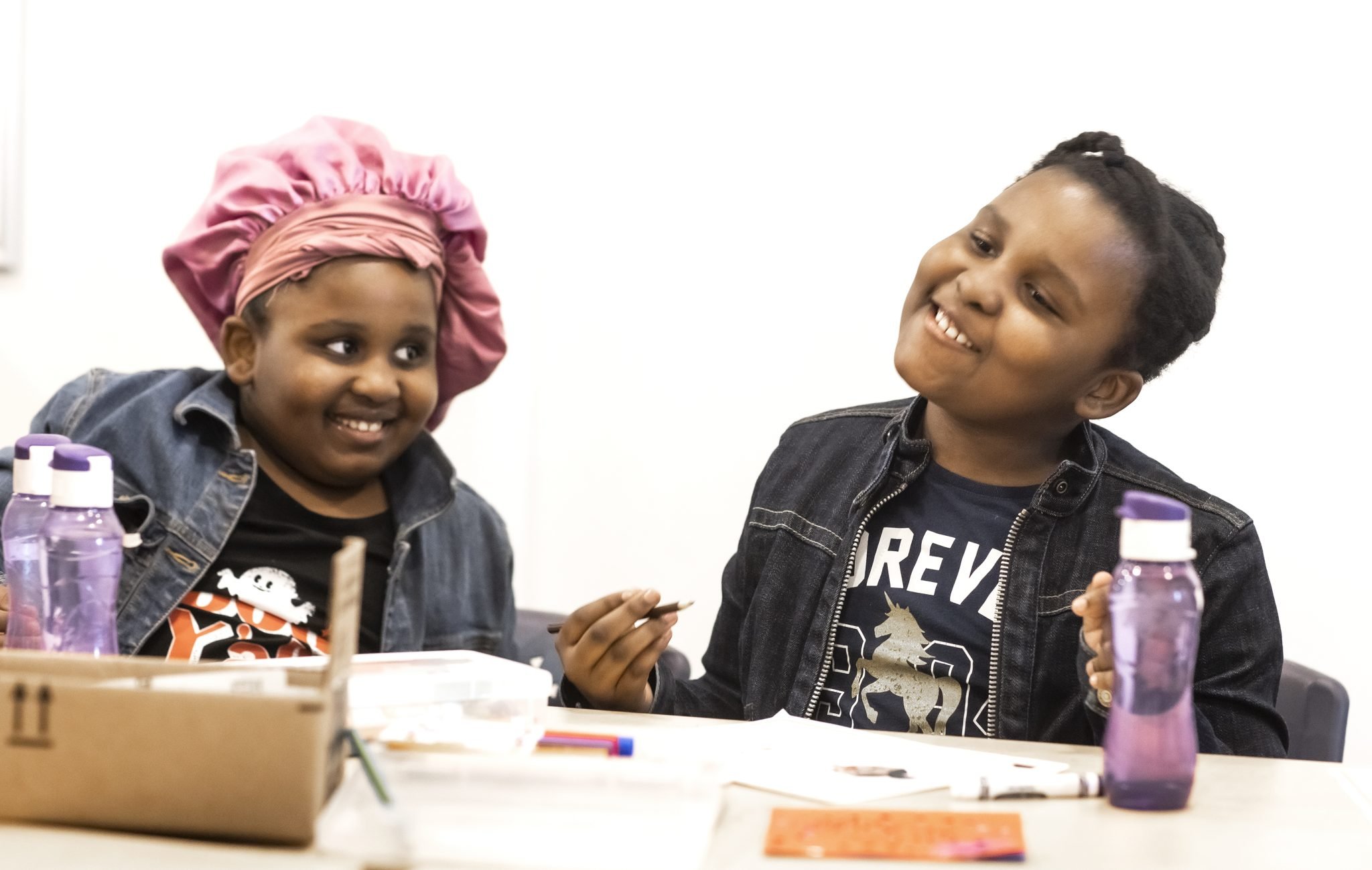
Photo Geoff Forester/New Hampshire Humanities
The Amiko Program is a good place for kids. They come after school from many parts of the city and gather with a lot of joy and laughter. It’s a vibrant place. There’s a gym, and coaches, one-on-one tutoring sessions, dinner, gardening, music and reading.
The kids are multilingual learners joining a New Hampshire Humanities literacy program called “Connections.” Here’s a story of one afternoon when 12 children gather to read the book together and draw their own portraits as Auntie Luce does in the story.
The kids were drawn to Francie Latour’s hero, Ti Chou (meaning “sweetheart”). Ti Chou grew up in the United States with a mystery. Her mom was born in Haiti, and the mystery is that she doesn’t understand for sure who she is. She knows her birth story has to do with poverty and violence in her mom’s home country.
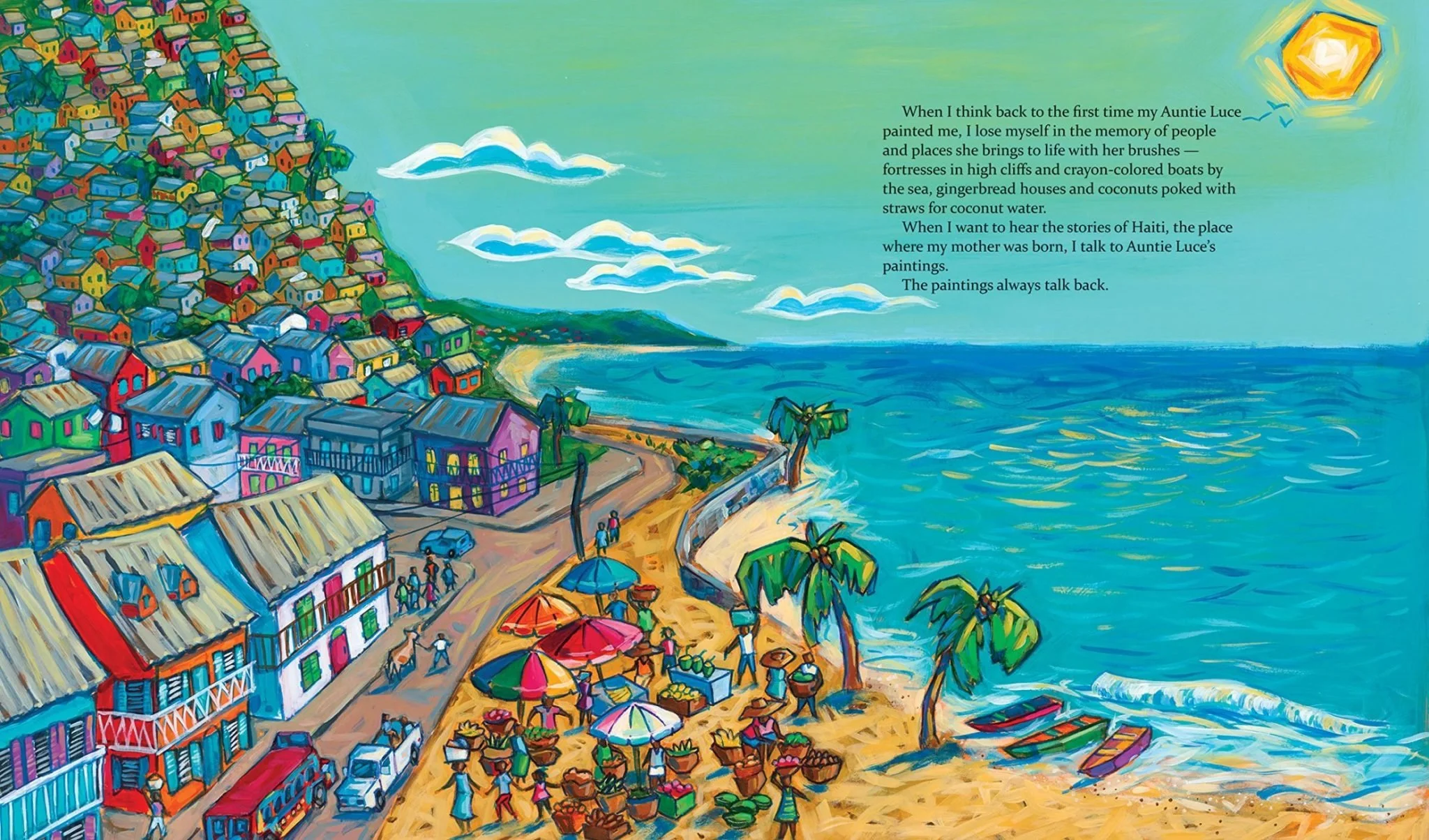
Illustration by Ken Daley from Auntie Luce’s Talking Paintings
Ken Daley’s pictures in the book honor the many colors of Haiti as seen through the eyes of Auntie Luce, who is a painter.
“To paint Haiti,” Auntie Luce tells Ti Chou, “it takes the darkest colors and the brightest ones, and all the colors in between.”
In this way, she depicts for children not only the bright beauty of the country but also the dark sorrows of its violence.
The Amikos, as the staff calls the kids, know the word “revolution.” They know the word “war.” Latour writes that the United States and Haiti were both born from a revolution. Ken Daley drew portraits of Haiti’s national heroes, including Francois-Dominique Toussaint Louverture, the general who “opened the way” for a free nation as he led Haiti’s revolution.
Three of the students, Josephine, AndreAnna, and Delephin, are from Haiti. They were excited to read a story about Haiti and see Daley’s illustrations of multicolored houses by the sea. IYNB provided copies in Kreyòl (Haitian Creole), and that changed everything for the Haitian girls. All the children were given a copy of “Koze Penti Ak Tati Luce (Auntie Luce’s Talking Paintings).”
The Haitian girls wanted the Kreyòl version to bring home to their families.
All the children from many backgrounds were able to see the language of Kreyòl, which is one goal of IYNB’s multilingual initiative.
Latour gave the children and their families an honest and affirming book created by a Haitian American writer who loves her home country and shares that love of a home even in the country’s harsh times.
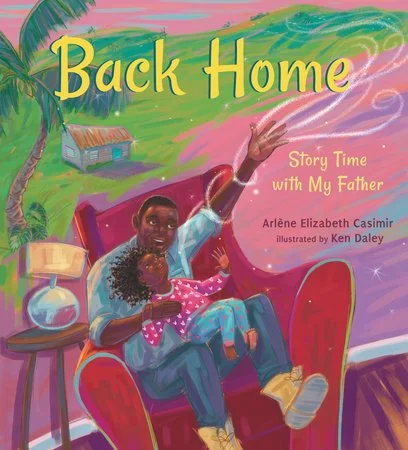
Another IYNB-featured story is “Back Home: Story Time with My Father” by Arlène Elizabeth Casmir, also illustrated by Ken Daley. A child, Lune, from Haiti, loves her father’s stories. All his stories begin with the word “lakay,” which means “back home” in Kreyòl. Back home is Haiti, a place Lune knows only from her father’s stories.
Both Lune and Ti Chou are hungry to know their home country as part of who they are. All children are, though they may not speak it. When Ti Chou visits her Auntie Luce in Haiti, Auntie Luce tells her, “You hold this place in your skin, deep in your bones.”