
Discussion guide for ‘The Cat Who Liked Potato Soup’
About the book
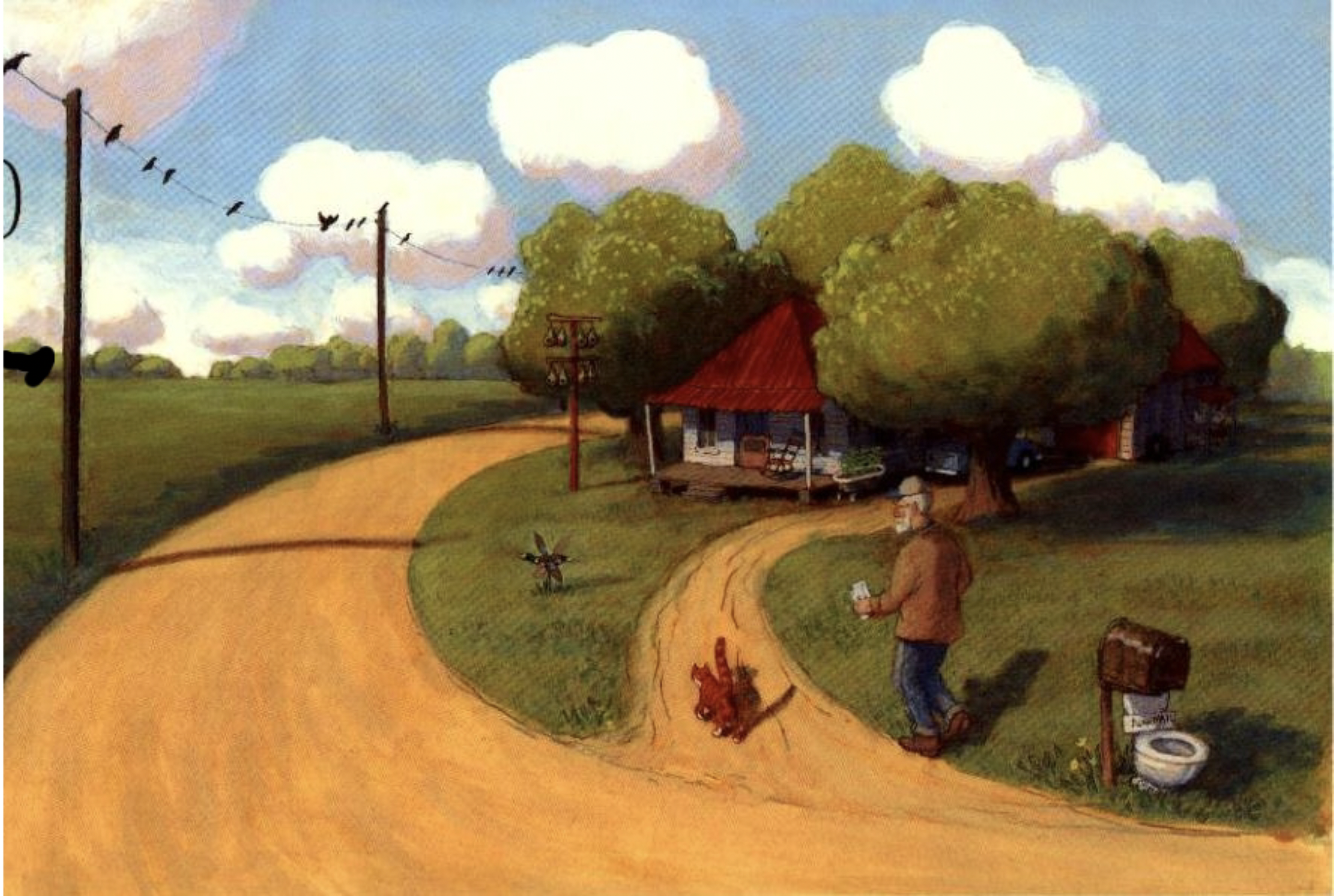
There was an old man, an ol’Texas boy, country raised, don’t you know.
He lived on a road called Chatterpie, just him and an uppity old cat — a cat who’d rather eat the old man’s potato soup than catch blackbirds. A cat who liked to go fishing with the old man and sit on the bow of his boat, her face into the wind, like she was a hood ornament. A cat the old man loved dearly, but not so’s you’d notice. Terry Farish and Barry Root have created a perfect pair of curmudgeons in this wry, unconventional love story.
About the illustrator
Barry Root is the illustrator of many books for children, including “The Araboolies of Liberty Street” by Sam Swope, “Nobody’s Dog” by Charlotte Graeber, “Two Cool Cows and Brave Potatoes” by Toby Speed, and “Messenger, Messenger” by Robert Burleigh. He says, “I’ve always been pro-cat, although our house is divided on the subject. To appreciate a cat requires a certain amount of abstraction, I think — and a sense of humor.” Barry Root lives in Pennsylvania with his wife (the illustrator Kimberly Bulcken Root), their three children, and a couple of useless dogs.
Pre-reading activity
How do you know someone cares about something or someone?
What types of things do they do to show their affection?
What’s the best part about having a pet?
Post-reading questions
What does the author mean when she said the old man liked the cat, “but not so’s you’d notice.”
Describe the old man and the cat.
What do the pair like to go do together?
Where do they live?
In the end, what happens?
Discussion questions
How does the old man refer to the cat? Why? What does this tell you about what he thinks of her?
Does the old man care for the cat? How do you know? Does the cat like the old man? How do you know?
Describe the home of the old man and the cat. Do you think it would be lonely on Chatterpie Road?
What meal do you like to share with your best friend? Why? What other things do you do together? Do you think the cat is really the old man’s best friend?
What strange items does the old man have in his yard? Why do you think they are there? What does this tell you about him?
Why does the old man call the cat “Your Royalty?” How do cats act differently than dogs? Do you think she’s grateful for the warmth?
Why doesn’t the cat go fishing with the old man? What does she do instead?
Why do you think the illustrator chose the colors he did on each page? What do they add to the story?
Which illustration is your favorite? Why?
How does their friendship change by the end of the book? What does the old man learn? What did the cat learn?
Post-reading activities
Language arts
Rewrite the story from the perspective of the cat.
Tell the cat’s story about his adventure catching the fish. What does she say about it?
As a class, discuss how and why authors use a particular point of view in a story. Why do you think Terry Farish decided to tell the story the way she did? How would it have been different if told through the eyes of the cat? The magpies?
Music
Sing to the tune of “Mary Had a Little Lamb”:
The old man had a skinny cat
skinny cat
skinny cat.
The old man had a skinny cat that never caught a thing.
They liked to go out on his boat
on his boat
on his boat.
They liked to go out on his boat
and try to catch some fish.
Can you write a third verse about the old man and his cat?
Art
Using only primary colors to begin with, try to mix the palette for one page of “The Cat Who Liked Potato Soup.” Discuss your results.
Math
Find a recipe for potato soup. Using grocery ads or the internet, calculate how much it would cost to create a pot of potato soup. Then, figure out how much it would be per serving.
History
This story was inspired by a conversation the author had with a neighbor. Sometimes people interview others about things they experienced firsthand, and these are called oral histories. Take an oral history or write down a story inspired by one of your own neighbors or family friends.
Science
Create a food chain that includes a cat, fish or human.
*Activities created by Tracie Vaughn.
Author interview
How did the story of the old man and the cat develop?
The story began with a chat with my neighbor in the tiny village of Combe in Oxfordshire. The chat turned into a journal entry. In the writing, the cat moved to Texas, and his owner became a Dallas Cowboys fan. What stayed the same is that the cat taught the man a lesson.
Compare writing a picture book to a novel. Besides the obvious length, what was the difference in the process?
In a picture book, the story is whole from the beginning. The concept comes as a whole. I also pare away and pare away some more to chisel the story down to its essential words. A novel is open more to exploring the characters, and as you develop them, you see the direction the plot must go. You have more liberty with language, but I love spare language in novels, too.
What writers have most influenced your own work?
Ernest Hemingway writes novels with simple sentences that don’t have a lot of clauses. I like his clean, simple, elegant style. My favorite book is “The Old Man and the Sea.” It’s a fishing story, but what I love is how he writes about a boy’s devotion to an old man whose luck has gone. I fall in love again and again with books for children, and each of them affects me. Among my favorite books are “One-Eyed Cat” by Paula Fox and all the picture books by Margot Zemach. I have her quote on my bulletin board: “If there are only cornflakes and mustard in the kitchen it’s a great thing to be able to paint chocolate pudding.”
What advice would you give young people who want to be writers?
Two things: Be part of the web of literature, be shaped by it, and have a passion for the work of other writers so that if someone asks you, which could you do without in your life — writing or reading? — that would be the toughest question you could ever answer. The second thing: experience the world. Be with people unlike yourself. Try always to understand people who have different points of view or different ways of living than yours.
What can your fans look forward to next?
I’m working on a book about a family that has moved to America from Sudan.
