
Vietnamese traditional medicine
FEBRUARY 24, 2023Return to Viet Nam, part 5
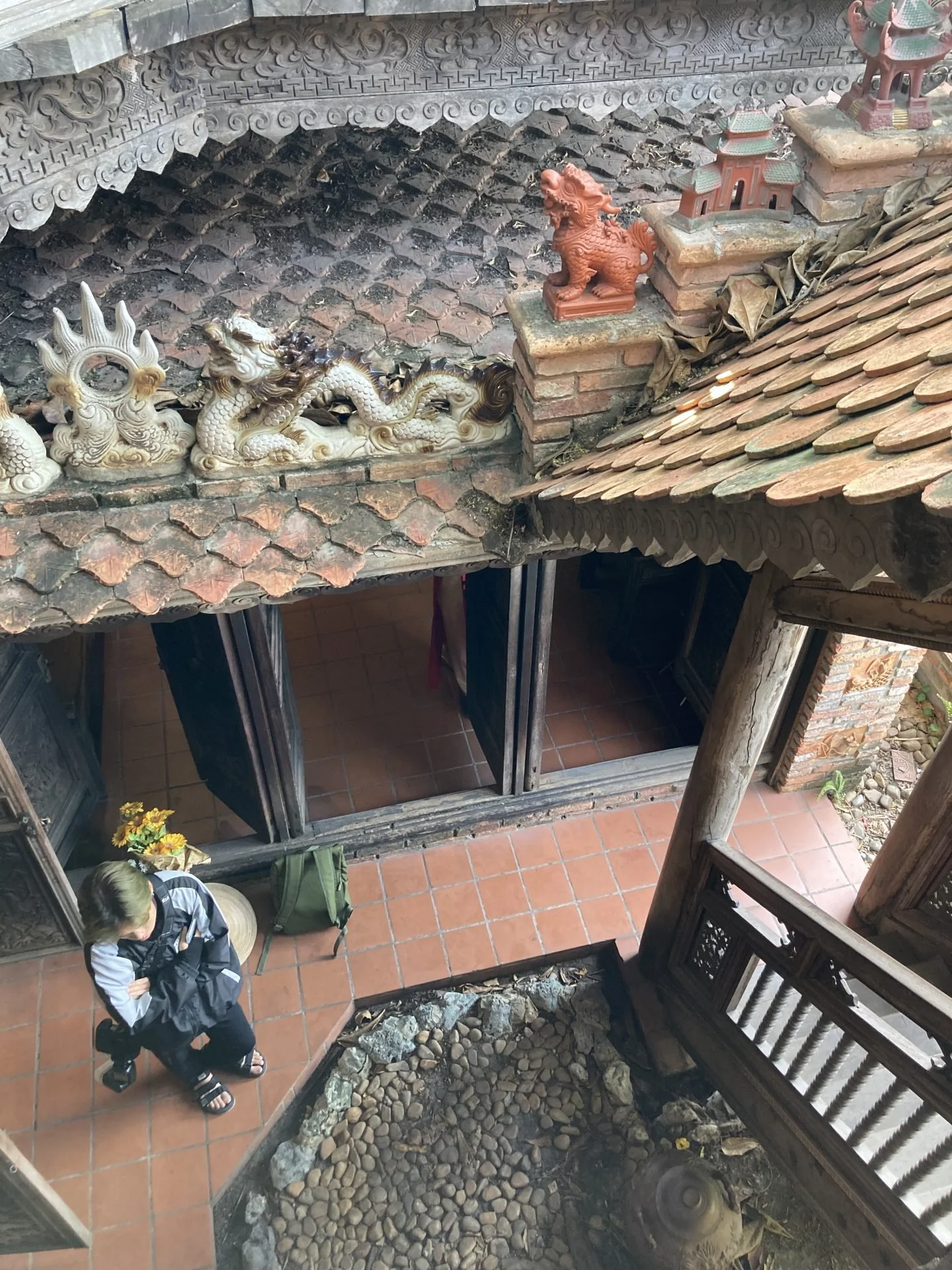
Museum of traditional medicine
It’s dark in the morning. I don’t have internet where I’m sleeping. It’s just dark, a little cool, humid, and still. I’ve come to the office of our hotel where there is internet, and I can now write this post to you. I’m thinking of students at Mary and Kara’s English class who know this topic I want to show you pictures about here. Where I write — beside me is a couch. Suddenly, I’m aware of snoring and realize someone or many people are sleeping around me. They are hotel staff who have probably traveled a distance to cook for us. I can’t see them. I have mostly the light of this iPad I’m typing on. I’m in Hoi An, by the South China Sea, which has a new name, East Sea. Lots of places have new names.
But the pictures I want to show you are from Saigon, where I was introduced by practitioners to traditional medicine.
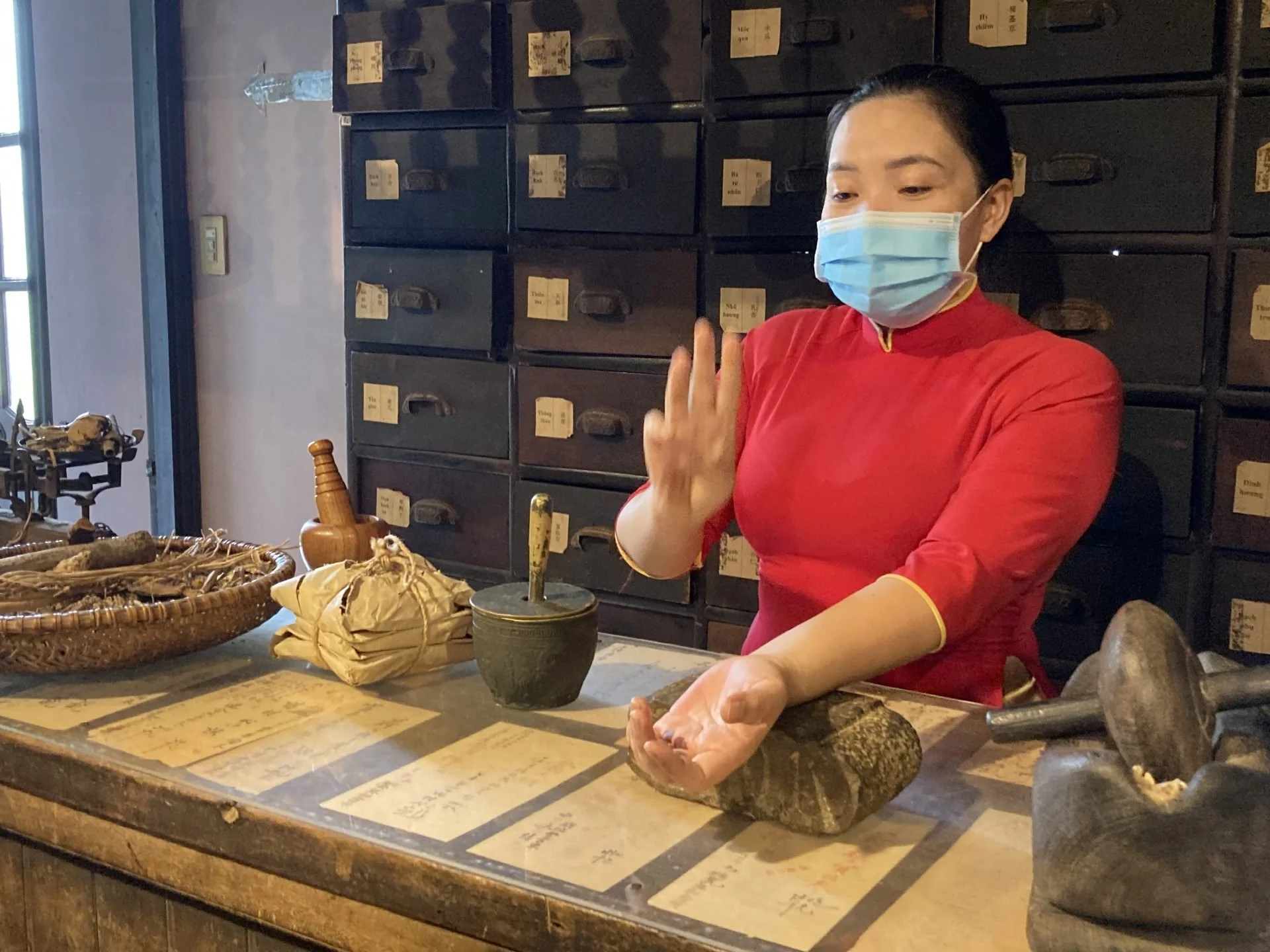
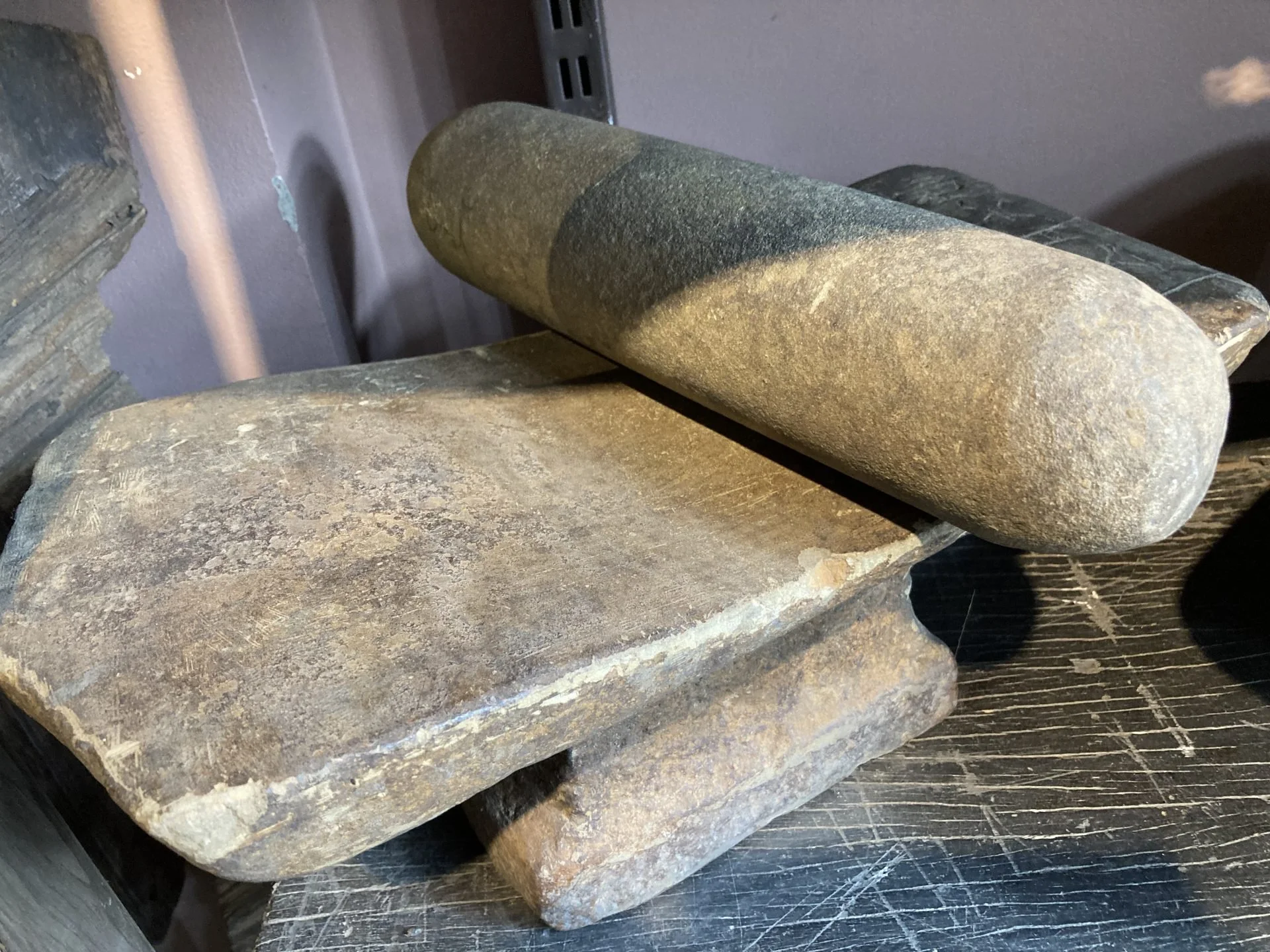
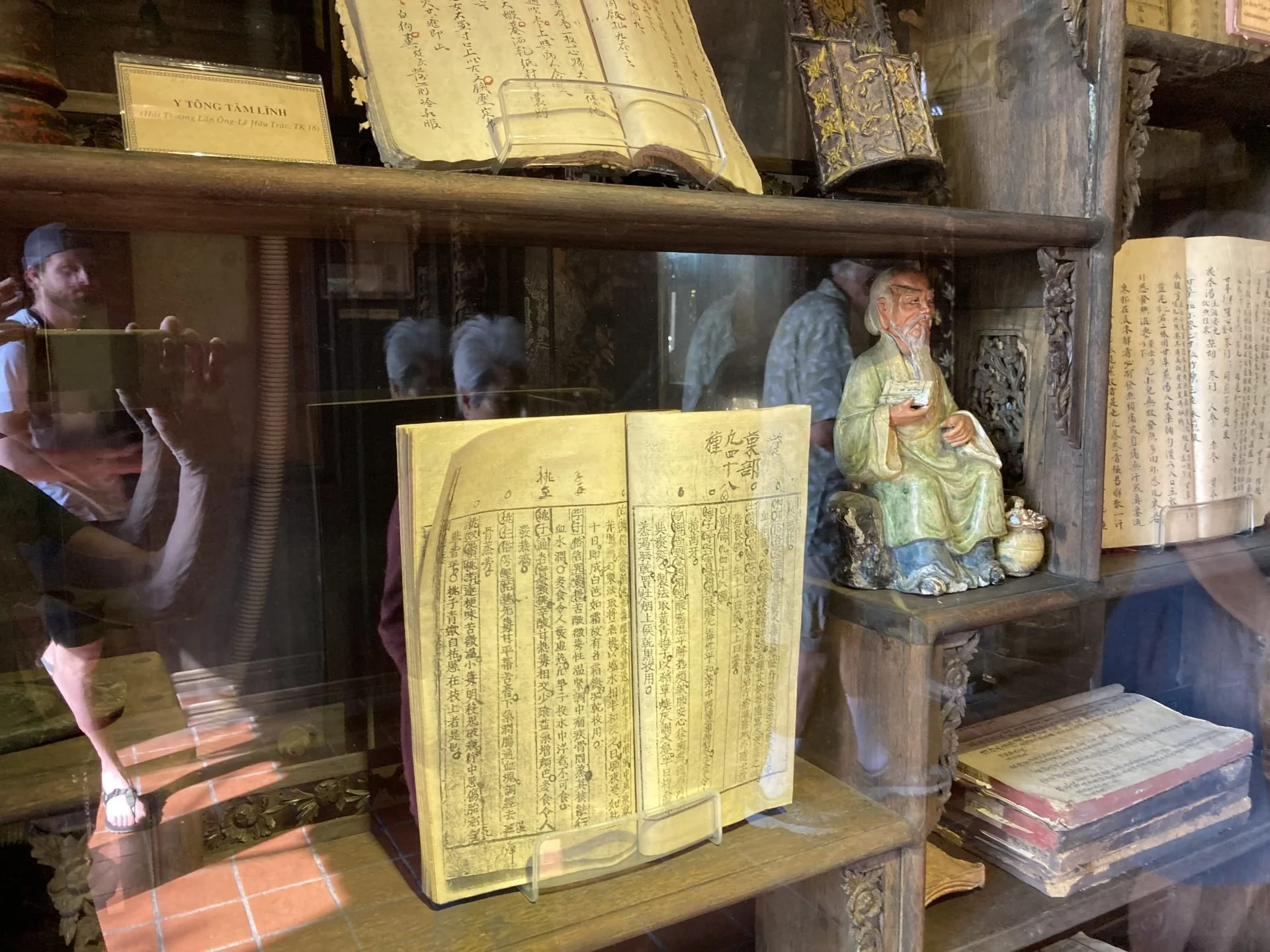
Above is our attendant at the FiTo Museum of Traditional Vietnamese medicine. She explains to us that acupuncture was first practiced by the Vietnamese. Someone had discovered the impact of the pressure of stones while walking barefoot across them. Acupressure. The practice was later explored by the Chinese and developed into acupuncture. The young woman guided us through rooms of first monographs describing methods of herbs and dosage for people with different conditions. There is an art form of the mortar and pestle to crush the herbs. We learned the methods of boiling herbs in water and drinking the decoctions. I had read so much about life-saving decoctions of Cambodian people in their travails and deprivation of food.
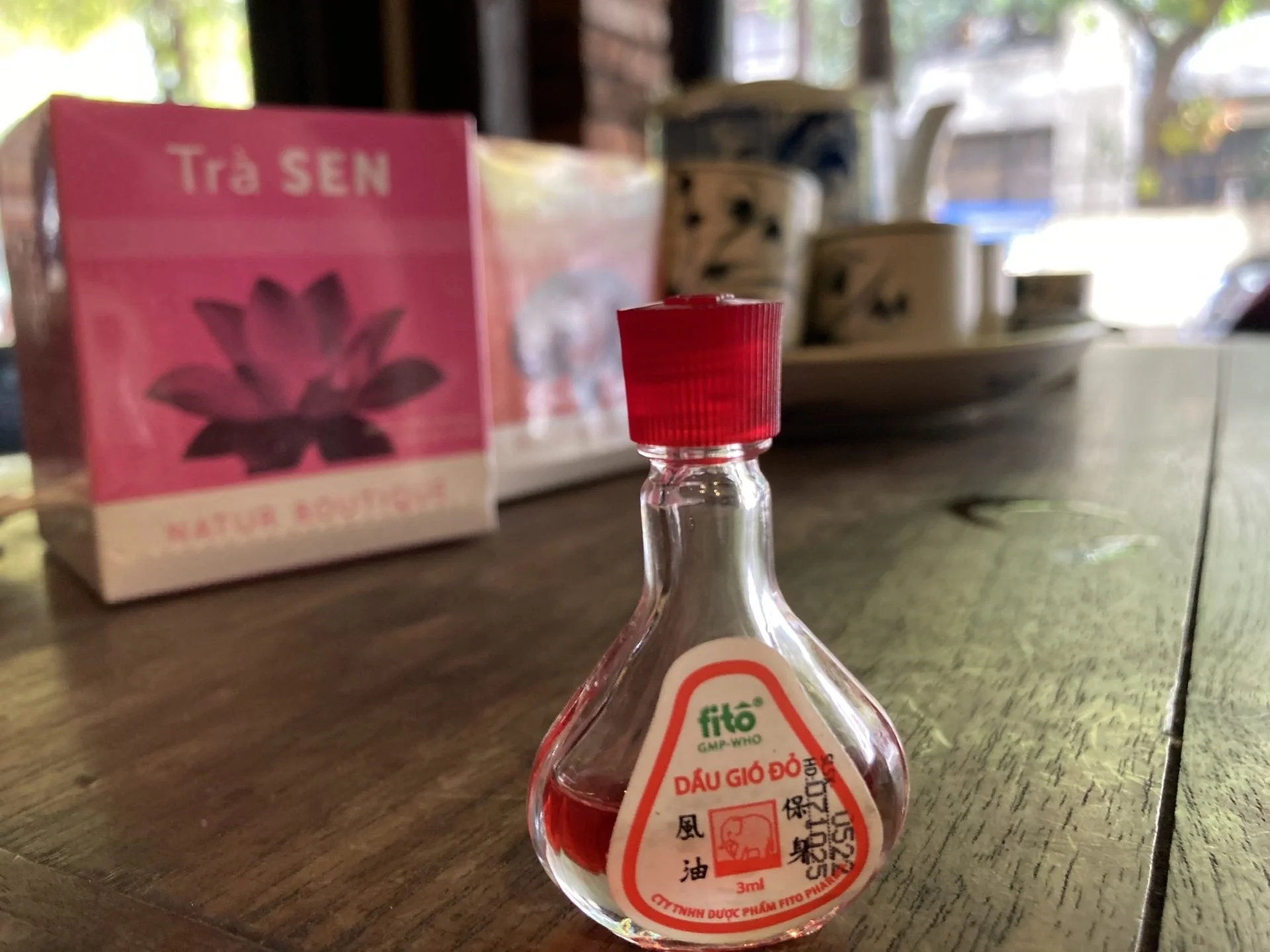
Our attendant gave us drops of a potion to rub between our palms. We then placed our palms where there was pain, and it made my skin tingle.
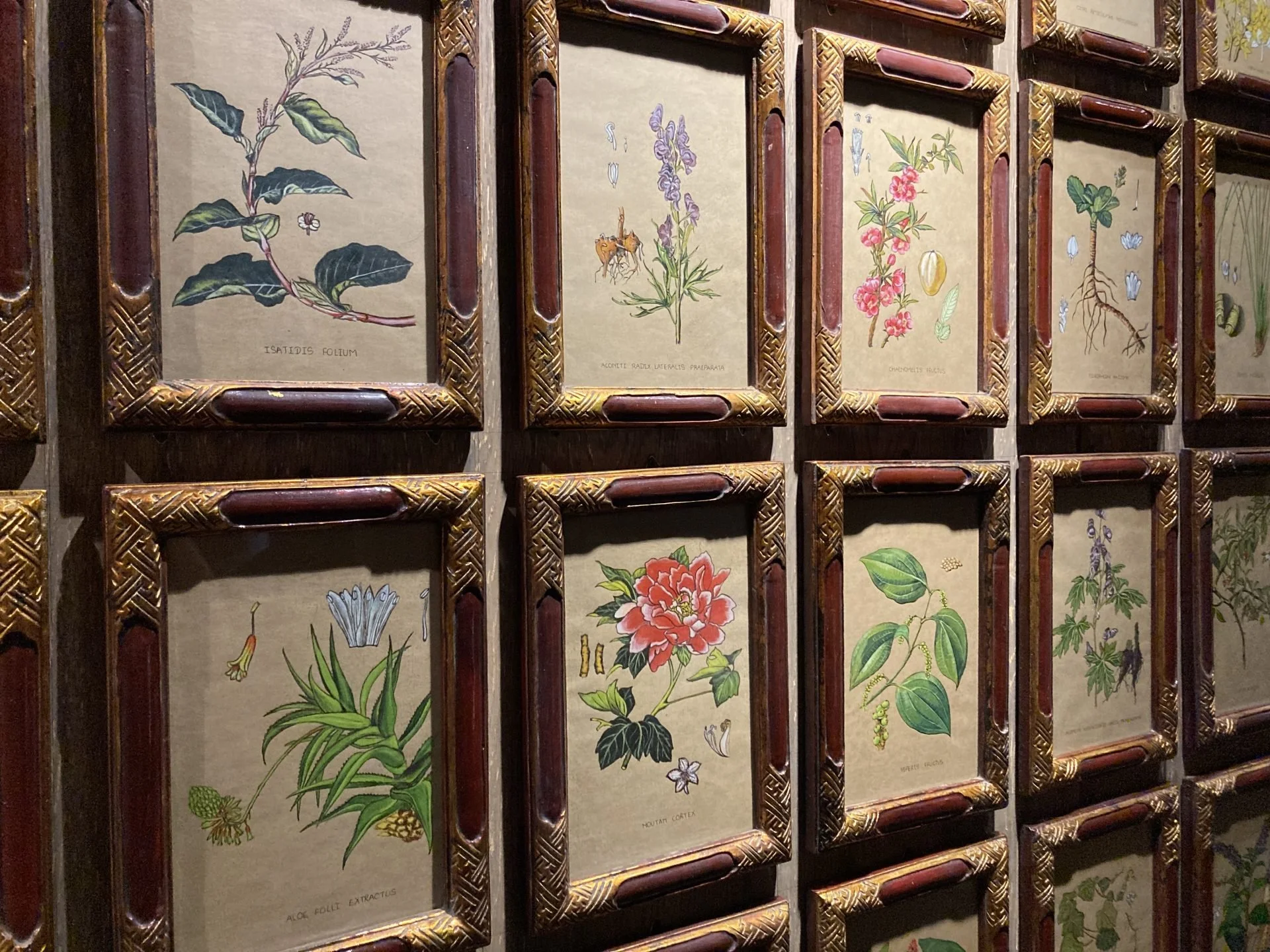
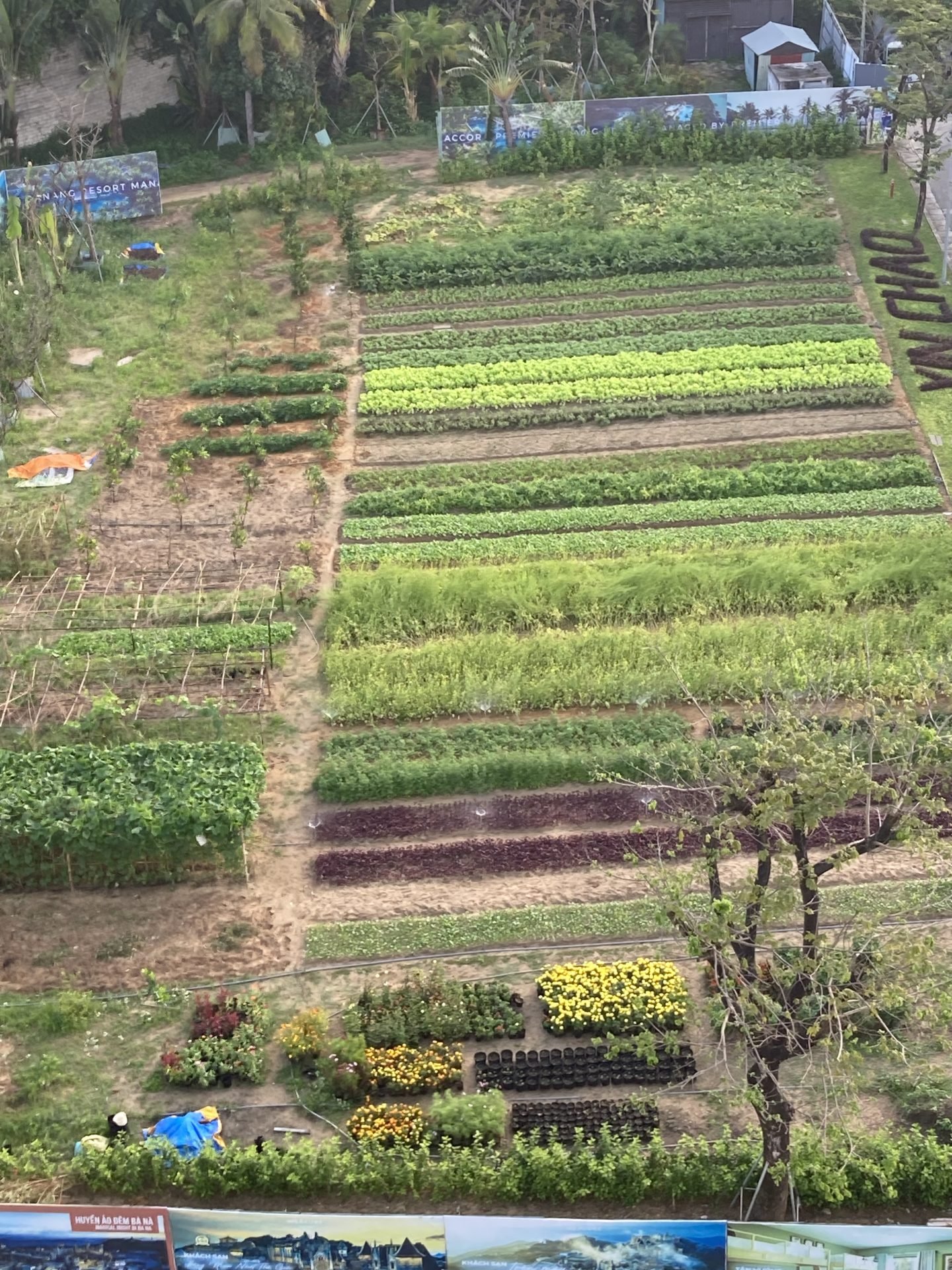
One room is devoted to illustrations of herbs, stalks, and blossoms used for medicines. Later in our journey around Danang and Hoi An, I see vast green fields of rice and also gardens in the smallest corridors of soil around a house. Here is a garden plot of vegetables and herbs cultivated between large buildings on a crazy, busy urban street.
I’ve never drunk much green tea, but our young attendant leaves us with this prescription: “Drink green tea in the morning, not at night. It gives your body too much energy to drink at night. But in the morning, drink it with honey and cinnamon. Cinnamon has many virtues,” she explains.
The room is coming alive where I write. My fingers are sticky on the keys in the humidity. The person has slipped away from the couch, and I didn’t see them go. Two staff people come to the hotel desk, rubbing their eyes. Someone turns on a light. Across the way, I see the huge sea. I’ll show you.